Semuliki National Park: Uganda’s Hot-Spring Paradise. At the far western edge of Uganda, beneath the dramatic shadow of the Rwenzori Mountains, Semuliki National Park feels like a journey into another world. The air is warm and heavy with the scent of rainforest, palms rise above tangled green vegetation, and bird calls ripple through the forest canopy. At its heart lie the famous Sempaya Hot Springs, powerful, steaming reminders that the earth beneath this peaceful forest is very much alive. Semuliki is not simply a place to tick off on a safari itinerary. It is one of Uganda’s most atmospheric parks: wild, humid, richly forested and distinctly Central African in character.
The Sempaya Hot Springs Experience
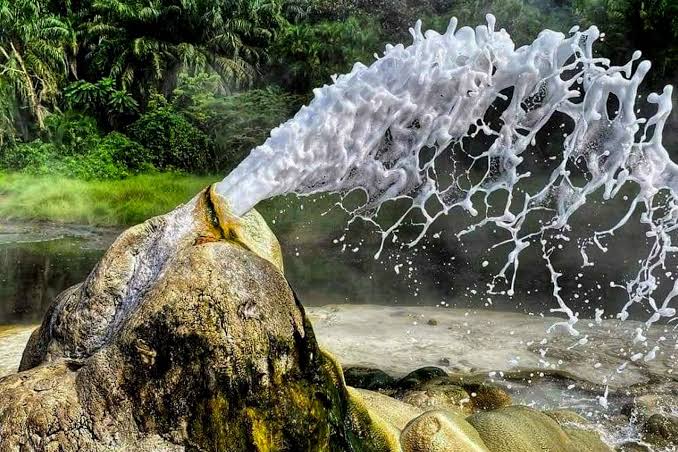
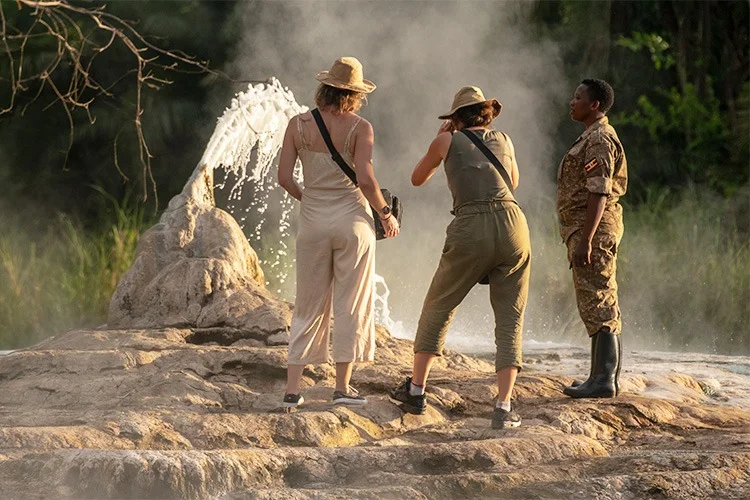
The park’s best-known attraction is the Sempaya Hot Springs, where visitors follow a guided forest trail to two remarkable natural springs. The female spring, Nyasimbi, is the dramatic one. Steam rises from its mineral-rich waters, and boiling water bursts from the ground like a natural geyser. The heat is intense enough to cook eggs and plantain a popular and memorable part of the visit when arranged with park staff.
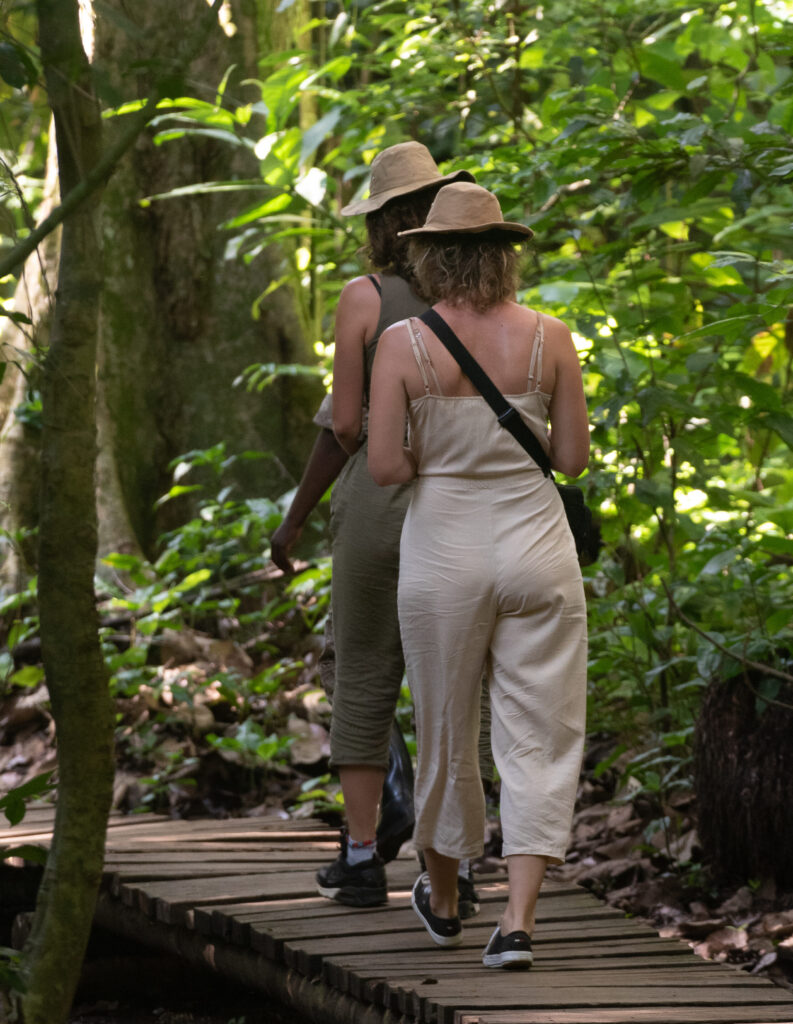
A longer walk through palm-filled forest and across a boardwalk leads towards the male spring, Bintente. The journey is as rewarding as the destination. Watch for monkeys moving through the trees, colourful butterflies near the trail, and birds calling from the dense canopy. In Semuliki, the hot springs are not an isolated attraction; they are part of a complete rainforest experience.
Activities in Semuliki National Park
A visit to Semuliki is ideal for travellers who enjoy walking, birding and discovering quieter places in nature. Guided nature walks: Forest trails reveal towering trees, butterflies, primates and the remarkable plants of the Congo Basin ecosystem. The Sempaya trail is the most popular, combining rainforest exploration with the hot springs.
Birdwatching: Semuliki is one of Uganda’s outstanding birding destinations, with more than 400 recorded bird species. Its lowland forest supports several species associated with Central Africa, making it especially rewarding for serious birders. Hornbills, turacos, flycatchers and the unusual lyre-tailed honeyguide are among the species visitors hope to see.
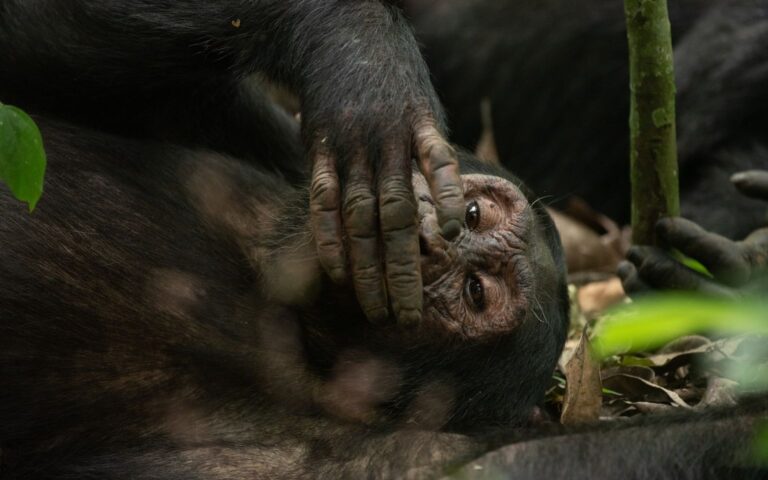
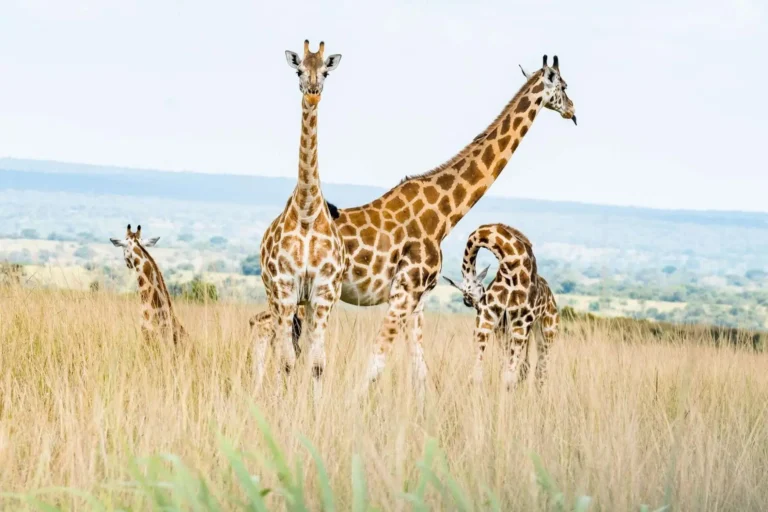
Primate and wildlife viewing: The park is home to several primates, including black-and-white colobus monkeys, red-tailed monkeys, vervet monkeys and chimpanzees. Forest elephants, buffalo and antelope may also be present, though Semuliki is better experienced as a rainforest and birding destination than as a traditional big-game safari.
Cultural encounters: Local community experiences can add depth to a visit. They offer an opportunity to learn about the traditions, food, music and stories of communities living around the forest. Photography and slow travel: Semuliki rewards patience. Mist over the trees, steaming springs, forest light, giant palms and the distant Rwenzori landscape create striking scenes for photographers and nature lovers.
What Makes Semuliki Special?
Semuliki is special because it brings the feel of the Congo Basin into Uganda. It protects one of East Africa’s few true lowland tropical rainforests, where Central African wildlife and vegetation meet the landscapes of the Albertine Rift. Unlike Uganda’s busier safari parks, Semuliki is quiet and intimate. Here, the excitement is not only in seeing animals; it is in listening to the forest, following a narrow trail, crossing a wetland boardwalk, and suddenly arriving at a spring that is hot enough to boil food.
The park also offers a beautiful contrast to nearby destinations. The Rwenzori Mountains provide dramatic highland scenery, while Semuliki lies lower, warmer and greener, an ancient forest world shaped by water, heat and time.
How to Get There
Semuliki National Park is in Bundibugyo District in western Uganda. The main access point is through Fort Portal, which is well connected to Kampala by road. From Kampala, travellers commonly drive via Mubende to Fort Portal, then continue towards Bundibugyo and the park headquarters at Ntandi. The journey is best done in a reliable vehicle, preferably a 4×4, particularly during the rainy season when some sections of the road can be rough.
From Fort Portal, the drive to the Sempaya Hot Springs and park area takes roughly two to three hours, depending on road conditions. The route is scenic, passing tea-growing areas, Rwenzori foothills and views towards the Albertine Rift.
For visitors with limited time, Semuliki can be combined with Fort Portal, Kibale National Park, Queen Elizabeth National Park or the Rwenzori Mountains. But for the best experience, allow at least one night nearby and give the forest time to reveal its character. Semuliki National Park is for travellers who want more than an ordinary safari. It is a place to walk slowly, breathe deeply and stand beside the raw power of the earth.